
Yahya Hakki
Also known as: يحيى حقي · يحيى حقي محمد حقي · Yahya Hakki Mohammad Hakki
We use Microsoft Clarity to understand how visitors use the site (heatmaps + session recordings). Your consent helps us improve AMDB. You can decline without affecting your use of the site.Privacy policy
Also known as: يحيى حقي · يحيى حقي محمد حقي · Yahya Hakki Mohammad Hakki
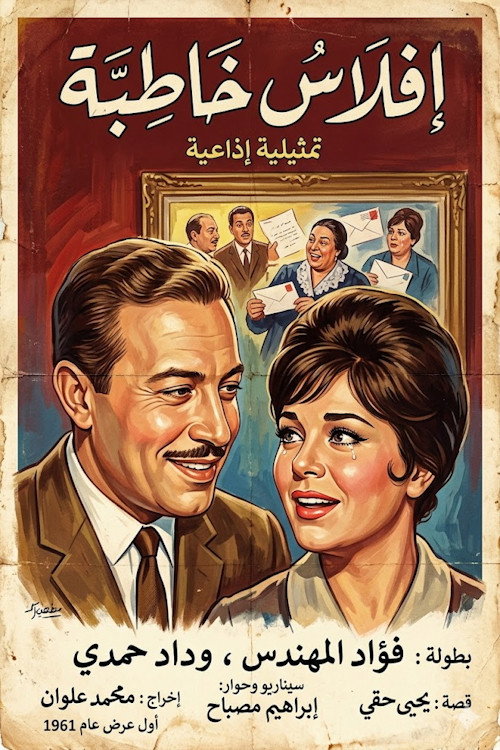
Egyptian writer and novelist. He was born in Darb al-Maida, behind the Zainab shrine, in the Sayyida Zeinab neighborhood in Cairo, to a family of Turkish origins. He received his initial education in the book, then at the Umm Abbas School in Sayyida Zeinab, then the Al-Syoufiyya School, then the Al-Ilhamiyah Secondary School in Baghdadan, then the Saidiyya and Khedive Schools until he obtained a baccalaureate degree in 1921 to join the Royal Higher School of Law at Fouad I University, where he obtained a Bachelor of Laws in 1925. After graduating, he worked in the Caliph’s office, then practiced law in Beheira and Alexandria, then worked as an administrative assistant at the Manfalut Center in the Directorate. Assiut, then he joined diplomatic work, where he was appointed secretary of the archives of the Egyptian Consulate in Jeddah in 1929 and in Istanbul in 1930, then at the Egyptian Consulate in Rome. After the outbreak of World War II, he returned to Egypt to work in the Economic Department of the Ministry of Foreign Affairs until he became director of the Foreign Minister’s Office in 1949, after which he was appointed first secretary of the Egyptian Embassy in Paris and Ankara, then Minister Plenipotentiary in Libya in 1953, but after his marriage From the French Jean Merry was dismissed from his job, so he worked in the Ministry of Commerce, then as an advisor to the Egyptian Book House, then as editor-in-chief of the Egyptian magazine (Al-Majalla) in 1961. He wrote many novels, short story collections, and translations, the most important of which are (Qandil Umm Hashem, Al-Bostaji, An Idea and a Smile, A Tear and a Smile, The Kohl Thief, Blood and Mud, The Mother of the Infirm, Sleep Well, Antar and Juliet, O Night, O Eye, A Suitcase in the Hand of a Traveler), A number of his literary works were turned into films, plays and series, the most important of which are (Al-Bostaji, Qandil Umm Hashem). He won the State Award of Merit in Literature in 1969, the Knight of the Order of the First Class from France in 1983, he received an honorary doctorate from Minya University in 1983, and he won the King Faisal International Prize for Literature in 1990. In 1943, he married Nabila Abdul Latif Saudi, the daughter of a member of the House of Representatives, but she died in 1944, a month after giving birth to her daughter, Noha. In 1953, he married the French visual artist Jean-Miri Jehu, who remained with him until his death in 1992.
Read moreShow less