

Riad Al Sunbati
Also known as: رياض السنباطي · Riyad El Sombaty · Riyad El Sunbati · Riyad Al Sombaty
He was born in the city of Faraskur, Damietta Governorate, Egypt.
His father was a reciter who used to sing at birthdays, weddings, and religious holidays in the surrounding rural villages and towns. He did not excel in studies when he was young, and he had a passion for music and singing from a very early age. His father, Sheikh (Muhammad), recognized the early talent in his son, so he encouraged him and took him with him in his musical band.
The great Sheikh (Muhammad Al-Sunbati)’s stay in Faraskur did not last long, so he moved to the city of Mansoura, the capital of Dakahlia, and enrolled his son in one of the scribes, but he was not interested in studying and teaching as much as he was interested in and passionate about the arts of Arabic music and singing. As fate would have it, the young boy (Muhammad Riyad Al-Sunbati) would be afflicted with an eye disease that would prevent him from continuing his studies, and that this would soon coincide with his father listening to him singing the song (Al-Sahbajiyya) by Sheikh (Sayed Darwish) on the oud.
Riyad showed a quick response and remarkable prowess. He was able to perform full vocals by himself, and he became the band’s star and first singer and was known as “Bulbul Al-Mansoura.” Sheikh Sayed Darwish listened to Riyad and was greatly impressed by him and wanted to accompany him to Alexandria to have better opportunities, but his father rejected that offer because of his great dependence on him in his band.
In 1928, Sheikh Al-Sunbati Sr. decided to move to Cairo with his son. He believed that he deserved to prove himself in artistic life, just like Umm Kulthum, whose father had been a friend of his before he moved to Cairo. He applied to the Institute of Arab Music, to study there, and a committee of Arab music masters at that time tested him. However, its members were somewhat astonished, as his abilities were too great to be a student, so they issued their decision to appoint him to the institute as a professor. For the oud and performance instrument, and his period of work at the institute lasted only three years, after which he submitted his resignation as he had made his decision to enter the world of composition, and that was in the early thirties of the last century through the Odeon Record Company, which presented him as a composer for the company’s leading male and female singers, including (Saleh Abdel Hay), (Nagat Ali), (Abdul Ghani Al-Sayyed) and (Rajaa Abdo). By the mid-thirties, he met the pyramid of Arabic singing (Umm Kulthum), beginning a long journey between them that many considered the greatest musical partnership. Arabic music that never happened, a partnership during which they presented works that were immortalized in the history of Arab music and singing. Many critics consider their song (Al-Atlal) to be the best Arabic song of the twentieth century ever. They shared a unique kind of friendship.
Al-Sonbati is the only Arab musician who won the UNESCO World Prize in 1977, as “the only Egyptian musician who was not influenced by any foreign music and who was able, with his music, to influence a region with its own cultural history,” according to the award presentation, and one of only five musicians who received this award at varying intervals. This award was the culmination of another group of awards, such as (the Medal of Arts from the late President Gamal Abdel Nasser in 1964), (the Medal of Merit, First Class from President Mohamed Anwar Sadat), and others.
Read moreShow less
In memory of Riad Al Sunbati
Known For
Photos
2Full Filmography
2

FAQ
How old is Riad Al Sunbati?
Riad Al Sunbati died at the age of 74.
When was Riad Al Sunbati born?
Riad Al Sunbati was born on November 20, 1906.
When did Riad Al Sunbati die?
Riad Al Sunbati passed away on September 9, 1981.
What is Riad Al Sunbati's nationality?
Riad Al Sunbati is Egypt.
How many works has Riad Al Sunbati appeared in?
Riad Al Sunbati has 2 credited works in our database.
What is Riad Al Sunbati known for?
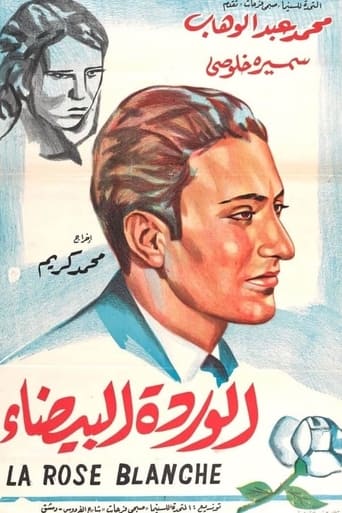
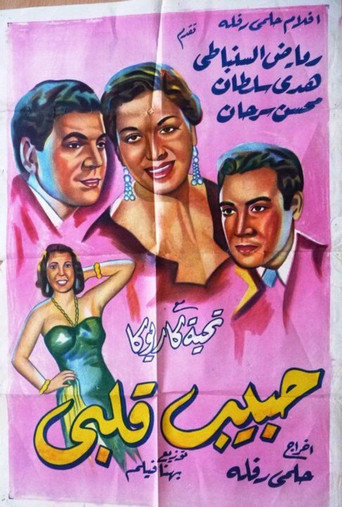
Riad Al Sunbati is known for The White Rose, Habib qalbi.
Where was Riad Al Sunbati born?
Riad Al Sunbati was born in Dumiyatt, Egypt.