
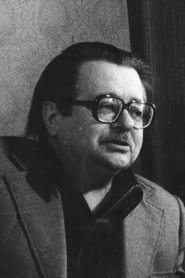
Nikolai Figurovsky
- Director
- Screenwriter
- Writer
- Actor
- Film actor
Also known as: نيكولاي فيجوروفسكي · Н. Фигуровский
Nikolai Nikolaevich Figurovsky (Russian: Николай Николаевич Фигуровский; 7 December 1923 – 14 June 2003) was a Soviet film director, screenwriter, writer and professor at VGIK. Honored Artist of the Byelorussian SSR (1964).
Nikolai Figurovsky was born in Chukhloma (modern-day Kostroma Oblast of Russia) into a family of a village schoolteacher Nikolai Mikhailovich Figurovsky who came from a long generation of Russian Orthodox priests. His grandfather Mikhail Ivanovich Figurovsky, a village priest, was arrested and sentenced to death in 1937 during the Great Purge. His brother Yuri Figurovsky (1925—2005), a constructor of radiolocation equipment, served as the head of the Tikhomirov Scientific Research Institute of Instrument Design between 1962 and 1969, while his cousin-uncle Nikolai Alexandrovich Figurovsky (1901—1986) was a prominent Soviet chemist and a professor at the MSU Faculty of Chemistry; he also had family ties with the Russian space scientist Anatoli Blagonravov.
During the 1930s his family moved to the Ternovka village of the Central Black Earth Oblast where he finished the secondary school in 1941. He served in the signal corps during the Great Patriotic War. After the war he entered the director's faculty at VGIK, the course led by Igor Savchenko which he finished in 1951. As a student he played a small part in The Young Guard movie directed by Sergei Gerasimov.
Between 1953 and 1984 he worked at Mosfilm, Belarusfilm, Uzbekfilm, Gorky and Dovzhenko Film Studios, directing six films and writing 30 screenplays. Among his famous works were two movies directed by Lev Kulidzhanov: the 1961 drama When the Trees Were Tall which entered the 1962 Cannes Film Festival and Crime and Punishment (1970) based on the novel by Fyodor Dostoevsky which was selected for the 31st Venice International Film Festival and awarded the Vasilyev Brothers State Prize of the RSFSR in 1971. For the latter Figurovsky also proposed an idea of an extended six- or seven-part TV version to be released simultaneously, but this was too ahead of its time.
He directed another two notable movies at Belarusfilm: the 1954 spy film Children of the Partisan which became the first Belarusian color motion picture and the 1958 war drama The Clock Has Stopped at Midnight (1958) which turned into one of the Soviet box office leaders of 1959 (8th place with 34.8 mln viewers).
Read moreShow less
Biography excerpt from Wikipedia, licensed under CC BY-SA 4.0
In memory of Nikolai Figurovsky
Before Acting
- •Studied at Gerasimov Institute of Cinematography.
Family & Connections
Known For
Frequent Collaborators
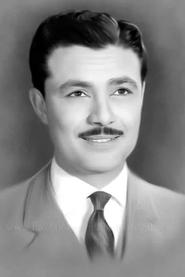

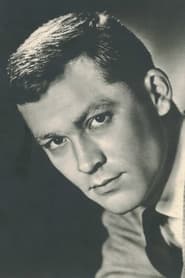
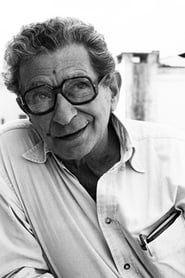
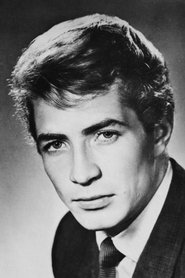

Photos
3Full Filmography
2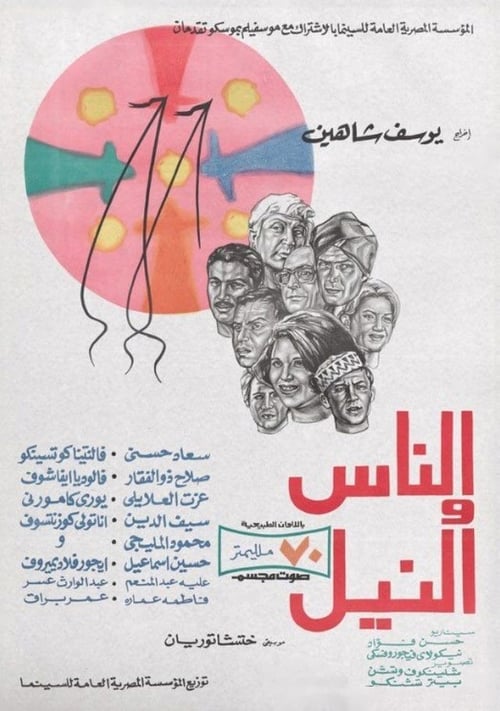
FAQ
How old is Nikolai Figurovsky?
Nikolai Figurovsky died at the age of 79.
When was Nikolai Figurovsky born?
Nikolai Figurovsky was born on December 7, 1923.
When did Nikolai Figurovsky die?
Nikolai Figurovsky passed away on June 14, 2003.
What is Nikolai Figurovsky's nationality?
Nikolai Figurovsky is СССР.
How many works has Nikolai Figurovsky appeared in?
Nikolai Figurovsky has 2 credited works in our database.
What is Nikolai Figurovsky known for?
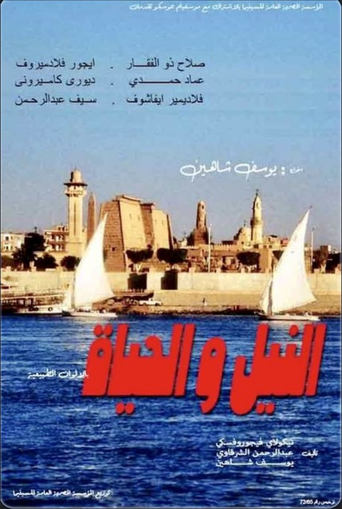
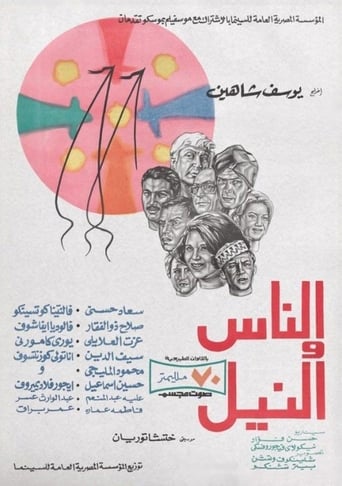
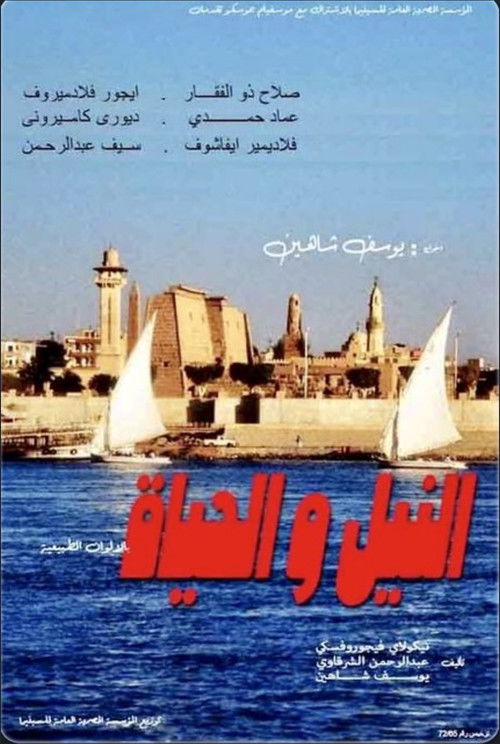
Nikolai Figurovsky is known for The Nile and the Life, The People and the Nile.
Where was Nikolai Figurovsky born?
Nikolai Figurovsky was born in Чухлома, Костромская область, РСФСР, СССР.