
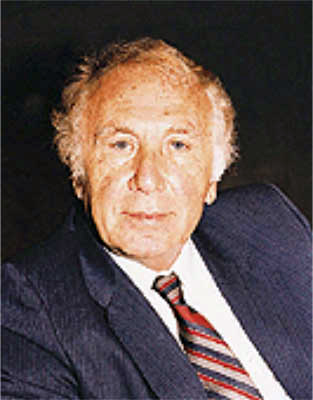
Nizar Qabbani
Also known as: نزار قباني
A Syrian poet known as the Women's Poet. He was born in one of the old neighborhoods of Damascus, and obtained a baccalaureate from the National Scientific College School in Damascus. Then he joined the Faculty of Law at the Syrian University and graduated in 1944. Immediately after his graduation, he worked in the diplomatic corps at the Ministry of Foreign Affairs, and moved in its embassies between Cairo, London, Beirut, and Madrid. After completing the unification between Egypt and Syria in 1959, he was appointed second secretary of the United Republic at its embassy in China, and he continued to work in the diplomatic corps until he resigned from it in 1966. The clerics in Syria demanded his expulsion from the Foreign Ministry and his dismissal from diplomatic work in the mid-fifties of the twentieth century after the publication of his famous poem (Bread, Hashish and Moon), which raised a severe storm against him that reached Parliament.
He began writing poetry when he was 16 years old, and published his first collection of poems (The Brunette Told Me) in 1944, while he was a student at the Faculty of Law at the time. He printed it at his own expense, and he has a large number of poetry collections, amounting to 35 collections that he wrote over the course of more than half a century, the most important of which are (Nahd’s Childhood, Drawing with Words, Poems, Samba, You Are Mine). He also has a large number of prose books, the most important of which are (My Story with Poetry, What is Poetry, 100 Love Letters), and he also established a publishing house for his works in Beirut called (Nizar Qabbani Publications). He mastered the English language, especially since he learned it when he served as Syria's ambassador to London between 1952 and 1955. He was married twice, the first to a Syrian named (Zahra), with whom he had Hadba, Tawfiq, and Zahraa. Tawfiq died of heart disease when he was 17 years old, and he was a student at the Faculty of Medicine, Cairo University. He eulogized him with a famous poem entitled (The Fabulous Prince Tawfiq Qabbani), and recommended that he and his wife be buried next to him after his death. The second is the Iraqi woman (Balqis Al-Rawi), who was killed in the explosion of the Iraqi embassy in Beirut in 1982. Her passing left a bad psychological impact on him, and he mourned her in a famous poem bearing the name (Balqis) and held the entire Arab world responsible for her murder. He had two sons from her, Omar and Zainab, and he lived the last years of his life in an apartment in the English capital alone.
Read moreShow less
In memory of Nizar Qabbani
Known For
Full Filmography
1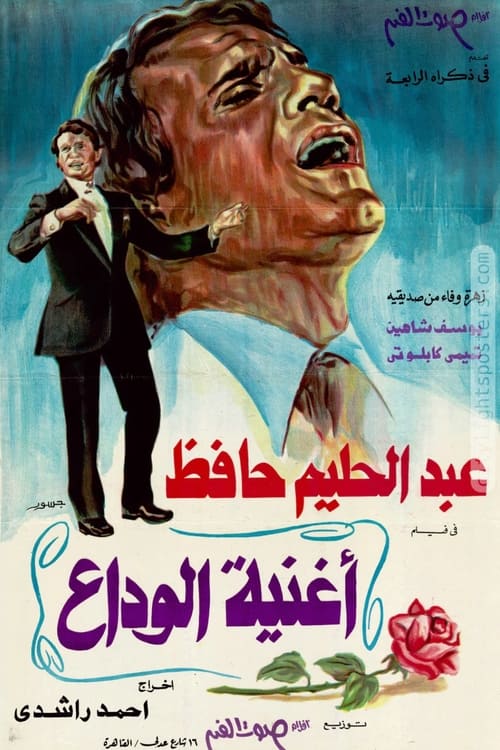
FAQ
How old is Nizar Qabbani?
Nizar Qabbani died at the age of 75.
When was Nizar Qabbani born?
Nizar Qabbani was born on March 21, 1923.
When did Nizar Qabbani die?
Nizar Qabbani passed away on April 20, 1998.
What is Nizar Qabbani's nationality?
Nizar Qabbani is Syria.
How many works has Nizar Qabbani appeared in?
Nizar Qabbani has 1 credited work in our database.
What is Nizar Qabbani known for?
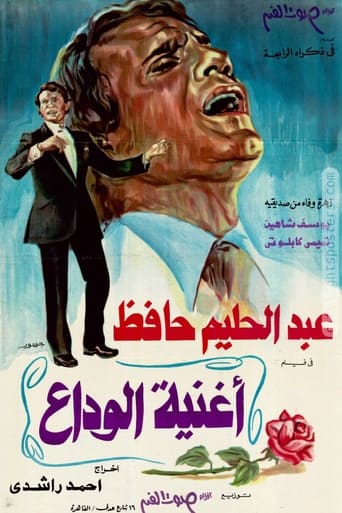
Nizar Qabbani is known for The Farewell Song.
Where was Nizar Qabbani born?
Nizar Qabbani was born in Syria.