
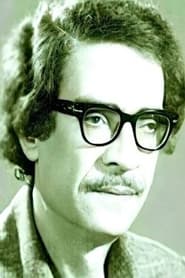
Morsi Gameel Aziz
Also known as: مرسي جميل عزيز
An Egyptian poet and songwriter. His father, Hajj Jamil Morsi, was one of the leading fruit merchants. He enabled him to satisfy his literary and artistic inclinations and interests when he was young, so he memorized many verses of the Holy Qur’an. He also memorized the entire seven Mu’allaqahs and read to many poets, led by Bayram al-Tunisi. He was also influenced by and absorbed the calls of fruit sellers and popular songs.
His inclinations for poetry appeared early, specifically at the age of twelve. During his high school and then law school, he became the president and member of several groups, the most important of which were poetry and literature, as well as the arts of photography, music, and acting. He also joined the travel team. He obtained his baccalaureate degree in 1940 and entered the Faculty of Law.
His first song was broadcast on the Egyptian radio in the year 1939, when he was only 18 years old at the time. It was called (The Butterfly) and was composed by the great musician (Riyad Al-Sunbati). In the same year, he became famous when he wrote the song (Yamzouk Yaward Li Oud), which was sung by the singer (Abdulaziz Mahmoud). After that, he began a long poetic journey, writing lyrics for great composers to be sung by great male and female singers.
Abdel Halim Hafez sang his lyrics for him, and he had the largest share: 35 songs. In addition to the famous trilogy sung by Mrs. Umm Kulthum and composed by Baligh Hamdi: (Biography of Love, Fat Al-Maad, One Thousand and One Nights). He is the only contemporary Egyptian poet for whom Mrs. Fairouz sang his poem “I Will Live,” and the meeting between them became a turning point, not only in his creative career, but in Arab cultural life in general. The song then became one of the most important songs in the heritage of Egyptian radio, as it was recorded in its studios during Fairouz and Rahbaniya’s visit to Egypt. He is the author of the lyrics of several famous songs, such as (Beit Al-Izz, A Sweet Zaghrouda Rang in Our House). He wrote several songs of an optimistic nature, such as: (Why Do You Busy Your Mind? Laughter and Play). He is also the author of poetic poems and contemplative human songs, such as (A Forgotten Stranger) by Najat, (The Dearest People) by Halim, and (Without Why) by Abdel Wahab. He also wrote several patriotic songs, including (My Country, My Country) by Abdel Halim Hafez, and (My Country, I Loved You, My Country). By (Mohamed Fawzi). During his life, he was not satisfied with his talent for writing poetry, so he studied the Arabic language, poetry, literature, and the modern and ancient Arab heritage, as well as world literature, its origins, theories, and critical rules. In addition to being a poet, he wrote short stories and scenarios for some films, and he also published some newspaper articles in some Egyptian newspapers. He was not satisfied with this, but went on to study and obtained a diploma in the art of screenwriting in 1963.
The state honored him with the Republic Medal for Literature and Arts in 1965, and Sharkia Governorate named the street on which he lived in the city of Zagazig after him.
He married in 1946 and had one son, Major General Magdy, and three daughters: Wegdan, a lawyer, Dr. Magda Morsi Jamil Aziz, a professor of philosophy at the Faculty of Arts, Tanta University, and Dr. Nihad, a pediatrician. He passed away on February 9, 1980, at the age of fifty-nine.
Read moreShow less
In memory of Morsi Gameel Aziz
Known For
Photos
1Full Filmography
1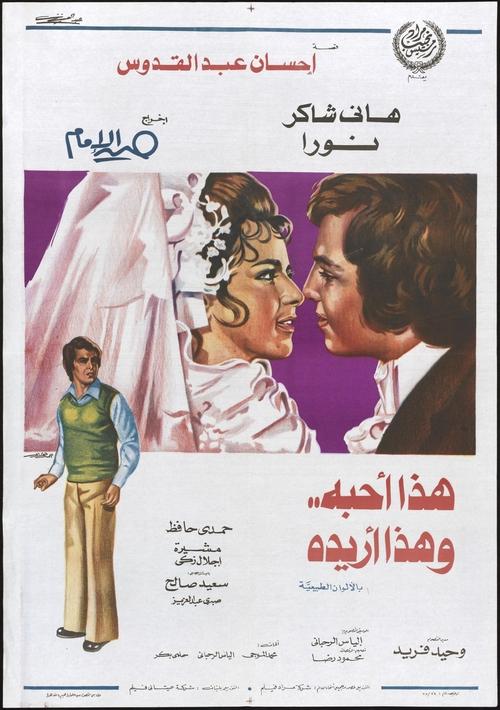
FAQ
How old is Morsi Gameel Aziz?
Morsi Gameel Aziz died at the age of 58.
When was Morsi Gameel Aziz born?
Morsi Gameel Aziz was born on June 9, 1921.
When did Morsi Gameel Aziz die?
Morsi Gameel Aziz passed away on February 9, 1980.
What is Morsi Gameel Aziz's nationality?
Morsi Gameel Aziz is Egypt.
How many works has Morsi Gameel Aziz appeared in?
Morsi Gameel Aziz has 1 credited work in our database.
What is Morsi Gameel Aziz known for?
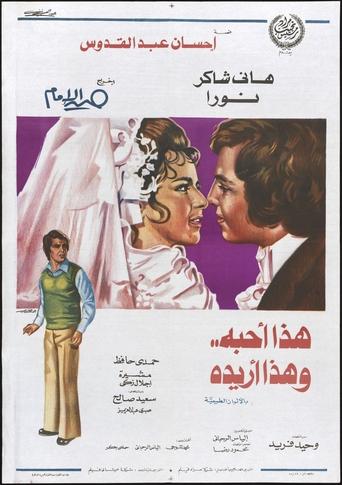
Morsi Gameel Aziz is known for Hadha Uhibbuh wa Hadha Uriduh.
Where was Morsi Gameel Aziz born?
Morsi Gameel Aziz was born in Egypt.