
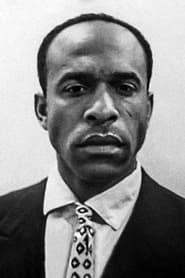
Frantz Fanon
- Writer
Also known as: فرانز فانون · Ibrahim Omar Fanon · فرانتز فانون
Frantz Fanon, born on 20 July 1925 in Fort-de-France in Martinique, was a psychiatrist and anti-colonial activist. His father was a customs inspector and his mother was a merchant. She had eight children, six of whom are alive and have completed secondary education. Fanon was a student at the Lycée Schoelcher, while Aimé Césaire was a teacher there.
In 1943, when he was 18, Frantz joined General de Gaulle's Free French Forces, passing through Dominica. His experience in the army was contradictory: while he joined the army full of patriotism, he faced racism and was seen as an undisciplined soldier, but he fought bravely in the battles to liberate France. He then returned to Martinique, where he obtained his baccalaureate in 1946. Thanks to a scholarship, he went on to study medicine in Lyon, where he specialized in psychiatry, while taking courses in literature and philosophy. In 1952, he published his book Black Skin, White Masks, taken from his doctoral dissertation in psychiatry, in which he questions the concepts of identity, assimilation, and anti-black racism, through his experience with West Indians who were born in Martinique and settled in France.
In 1953, he became chief physician at the Psychiatric Hospital in Blida, Algeria. Confronting the injustices of colonial society as well as the neuroses suffered by the population, he developed methods to treat the psychological effects of the colonial system on the colonists, particularly depersonalization and dehumanization. When the Algerian War broke out, he treated French soldiers during the day and FLN fighters at night. In 1956, he resigned from his position at the hospital to join the ranks of the National Liberation Front. A few weeks later, he was deported to Tunisia. He now claimed to be "Algerian", represented separatists in Africa, and wrote some of the most influential texts in the anti-colonial movement, such as "L'An V de La Révolution Algérien" (1959) and "The Wretched of Algeria". "Earth" (1961), introduction by Jean-Paul Sartre.
He was suffering from leukemia, and was treated in Moscow, then in October 1961 in Bethesda near Washington, where he died on December 6, 1961 at the age of 36, a few months before Algeria’s independence, under the name Ibrahim Omar Fanon. In a message he left with his friends, he asked to be buried in Algeria. His body is being transported to Tunisia, and will be transported by a GPRA delegation to the border. The body of Chadli Bendjedid, who later became president of Algeria, was buried in the Sifana cemetery near Sidi Trad, Algeria. Three of his works were buried with him: Black Skin, White Masks, The Fifth Year of the Algerian Revolution, and The Wretched of the Earth. His remains were transferred in 1965 and buried in the “Martyrs’ Cemetery” (Cemetery of War Martyrs) near the Algerian-Tunisian border in the municipality of Ain El Karma (Tarf Province). His wife, Marie-Joseph Doublet, known as Josie, died on July 13, 1989 and was buried in the train cemetery in central Algiers.
In honor of his work in psychiatry and his support for the Algerian cause, three hospitals in Algeria bear his name: the psychiatric hospital in Blida, where he worked, one of the hospitals in Bejaia and a hospital in Annaba.
Read moreShow less
Biography excerpt from Wikipedia, licensed under CC BY-SA 4.0
In memory of Frantz Fanon
Before Acting
- •Studied at University of Lyon.
Known For
Photos
1Full Filmography
1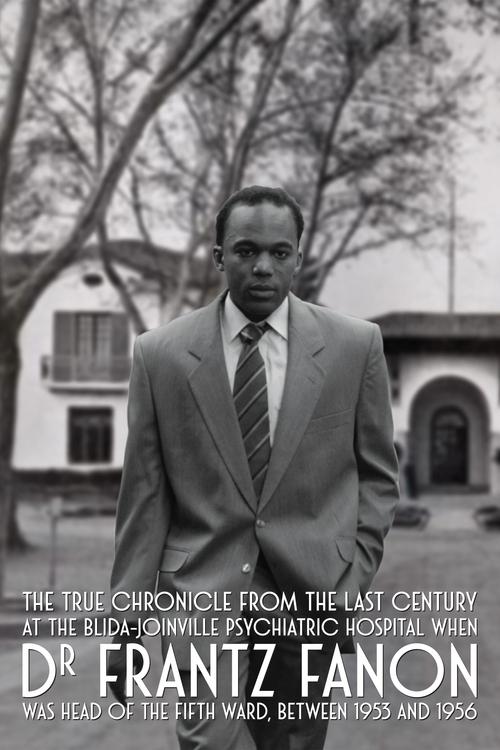
FAQ
How old is Frantz Fanon?
Frantz Fanon died at the age of 36.
When was Frantz Fanon born?
Frantz Fanon was born on July 20, 1925.
When did Frantz Fanon die?
Frantz Fanon passed away on December 6, 1961.
What is Frantz Fanon's nationality?
Frantz Fanon is France.
How many works has Frantz Fanon appeared in?
Frantz Fanon has 1 credited work in our database.
What is Frantz Fanon known for?
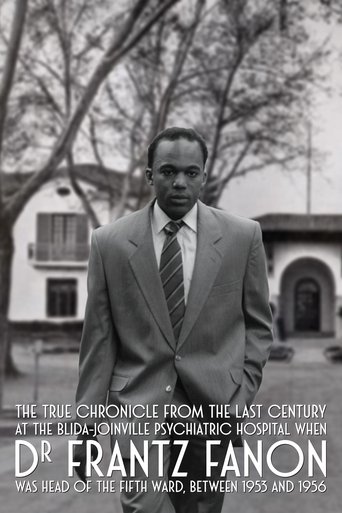
Frantz Fanon is known for True Chronicles of the Blida Joinville Psychiatric Hospital in the Last Century, when Dr Frantz Fanon Was Head of the Fifth Ward between 1953 and 1956.
Where was Frantz Fanon born?
Frantz Fanon was born in Fort-de-France, Martinique, France.